 SmartBirds
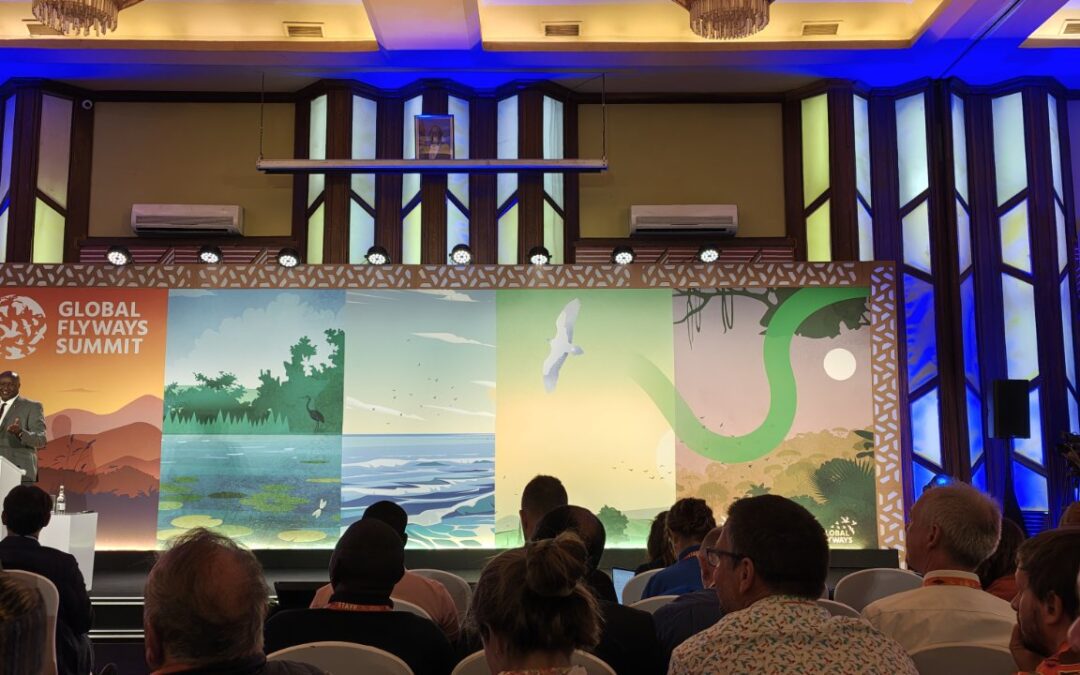
Photo: Stoycho Stoychev/BSPB
In Nairobi, BirdLife International presented the new edition of the “State of the World’s Birds” report during the Global Summit on migratory flyways, organized jointly with Nature Kenya. The report is published every four years, and this is the first edition dedicated to migratory birds and the flyways on which they depend. During the summit, representatives of governments, scientific and nongovernmental organizations, conservationists, and financial institutions—including the Bulgarian Society for the Protection of Birds (BSPB)—signed the “Nairobi Flyways Declaration.” Through it, they committed to strengthening cross-border cooperation and coordinated actions to protect migratory birds and their key habitats. The declaration lays the foundation for a more comprehensive and coordinated global approach to the conservation of flyways.
The State of the World’s Birds: Findings
The report’s findings are alarming—the populations of 45% of migratory bird species are declining. One in every nine species is threatened with extinction. The declaration of the slender-billed warbler as extinct in 2025 marks the first global extinction of a bird on the Eurasian and African continents in recent centuries. In the last 150 years alone, six additional migratory species have been confirmed or presumed extinct. The situation is particularly alarming for birds dependent on marine habitats, forests, and coastal wetlands. Seabirds and shorebirds are among the most threatened.
Many of the migratory birds that nest in Bulgaria are also threatened. There is a real danger that we will lose birds that were once common, such as the quail, whose song has been part of the childhood of generations of Bulgarians.

Photo: Damyan Petkov
“The State of the World’s Birds report is unambiguous: we are losing migratory birds at an alarming rate. But today’s Nairobi Declaration and finance announcements prove something equally clear: when the science is compelling and the case is made, the world acts. Governments are stepping up. Development banks are rising to the challenge. Now we implement at scale.”
Martin Harper, Chief Executive, BirdLife International
However, the report also offers grounds for hope: when concrete measures are taken, bird populations can recover. The main causes of their population decline are well known—intensive agriculture, climate change, unsustainable hunting, and invasive species. Experience shows that when conservation efforts cover the entire migration route, rather than just isolated sites, the results are significant. For example, the long-standing joint efforts to protect the Egyptian vulture along its migration route, coordinated by the Bulgarian Society for the Protection of Birds (BSPB), have already halted the decline of its breeding population in the Balkans.
“A major migration route passes through Bulgaria, and one of its narrowest sections is within our territory. Our efforts to prevent bird mortality here and to protect the sites where they stop to rest are of global significance. Sharing these efforts and responsibilities with partners further motivates us in our work.”
Stoycho Stoychev, Director of Conservation, BSPB

Photo: Zdeněk Vermouzek
Why Migration Routes Are Important
The report emphasizes that a migration route is not simply a line on a map. It represents a network of connected sites that birds use during their long journey—for breeding, feeding, and resting. The loss of any one of these sites can threaten the entire route.
This understanding is at the heart of BirdLife International’s Global Flyways Programme. It brings together the efforts of BirdLife’s partners in 120 countries, including the Bulgarian Society for the Protection of Birds (BSPB). The work is aimed at conserving key areas along the entire migration route—rather than focusing on individual sites, species, or national borders, this approach aims to holistically protect and restore these routes.
During the summit in Kenya, leaders, scientists, and representatives of conservation organizations signed the “Nairobi Declaration on Migratory Flyways.” Through it, they committed to working together to protect migratory birds and the habitats on which they depend along their entire journey. The declaration emphasizes that migratory birds do not recognize national borders and that their survival requires joint action in all the countries they pass through.
“We stand at a turning point. Migratory birds do not recognise borders. They connect Asia to Africa, the Arctic to the tropics. The Nairobi Flyways Declaration acknowledges this reality. I am proud to see the scientific community, conservation organisations and finance institutions united behind the science. This is the moment we have been waiting for.”
Her Imperial Highness Princess Takamado, and Honorary President, BirdLife International
The Bulgarian Society for the Protection of Birds (BSPB) also signed the declaration. For us, this provides very concrete direction for continuing our work: to convey its messages in Bulgaria and use it as a framework for advocating the protection of migration routes, linking our work on species conservation, power line safety, Natura 2000, nature restoration, and conservation policies with this global commitment.
Billions Are Being Mobilized for Conservation
The summit was attended by senior representatives of the World Bank and regional development banks, signaling an unprecedented institutional commitment. The Asian Development Bank will allocate $3 billion over the next decade to protect at least 50 priority wetlands along the migration route from East Asia to Australia, benefiting nearly 200 million people who depend on these ecosystems. In the Americas, the Inter-American Development Bank will allocate $3–5 billion by 2050 to conserve more than 30 terrestrial and marine landscapes. The World Bank and BirdLife are mobilizing several billion dollars in Africa, Europe, and Asia along the migration routes used by more than two billion migratory birds. In June 2026, the Global Environment Facility approved the Global Migration Routes Grant Facility, providing $8.97 million in direct grants and $107 million in co-financing to conserve and restore nine million hectares of wetlands, which is expected to benefit approximately 330,000 people.
You can view BirdLife International’s report on bird conservation here.
You can read the text of the Declaration in Bulgarian here.


