 SmartBirds
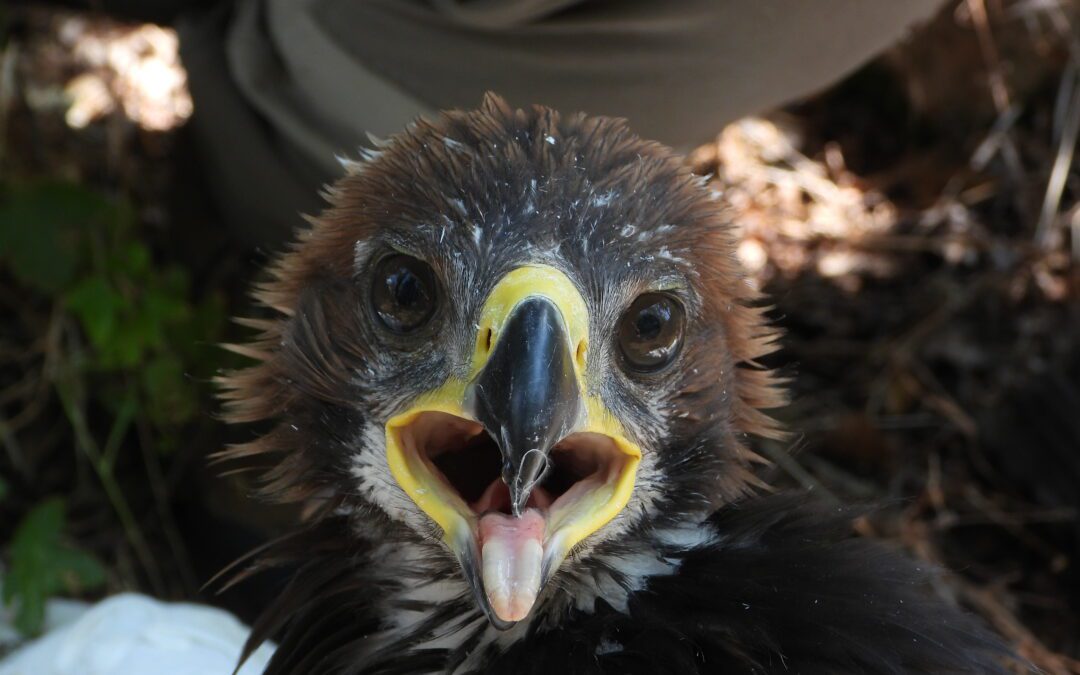
Pictures: Anton Stamenov – BSPB
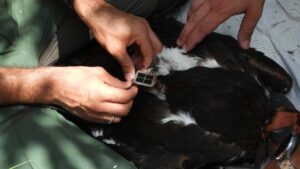
Experts from the Bulgarian Society for the Protection of Birds (BSPB/BirdLife Bulgaria) have fitted a young Golden Eagle (Aquila chrysaetos) with a GPS transmitter in one of the species’ nests within the Krumovitsa Protected Area. The bird was tagged at the appropriate age, shortly before fledging. In addition to the GPS transmitter, it was fitted with a standard ornithological ring, which will allow it to be individually identified in the future. The GPS transmitter will provide valuable information about the young eagle’s first flights, its movements, and how it uses the landscape after leaving the nest.
The location of the eagle’s natal nest is of particular conservation importance. The nest is situated within the Krumovitsa Protected Area, only around 170 metres from the site of one of the wind turbines proposed as part of an investment plan for a wind farm in the area.
This finding is particularly significant in light of the results presented in the project’s Environmental Impact Assessment (EIA). Surveys carried out by the investor’s consultants reported no Golden Eagle nests and recorded the species only once during the field observations. However, long-term monitoring conducted by experts from the National Museum of Natural History at the Bulgarian Academy of Sciences and BSPB paints a very different picture. The Krumovitsa Protected Area supports two breeding pairs of Golden Eagles, and both known nests are located within less than 300 metres of the planned 250-metre-high wind turbines.
This substantial discrepancy highlights the importance of ensuring that environmental assessments for large-scale infrastructure projects are based on sufficiently comprehensive field surveys and make full use of all available scientific data on the species that may be affected.
The Golden Eagle is a large bird of prey that requires extensive territories around its nesting sites. When inappropriately located within areas of high importance for raptors, wind turbines and their associated infrastructure can pose risks through collision, disturbance, and changes in habitat use.
The data that will be collected from the young eagle’s GPS transmitter will allow researchers to document, with exceptional spatial accuracy, how the bird uses the Krumovitsa Protected Area and the landscape surrounding its natal nest. These data will provide objective scientific evidence of the species’ actual use of the area, including the locations where the proposed wind turbines are planned.
The tagging of the young Golden Eagle comes at a crucial moment for the future of the Krumovitsa Protected Area. Following strong public concern over the proposed wind farm, numerous expert opinions submitted by BSPB, other conservation organisations, scientific institutions and citizens, as well as the clear opposition expressed by the mayors of the affected settlements and the Municipality of Krumovgrad, the Director of the Regional Inspectorate of Environment and Water (RIEW) – Haskovo issued a decision two weeks ago refusing approval for the proposed wind energy project.
The statutory deadline for the investor to appeal that decision expired on Monday. It remains to be seen whether the decision has now become final or whether it has been challenged before the court.
The young Golden Eagle is now on the verge of its first independent flight. Soon, its GPS transmitter will begin revealing where it flies, which areas it prefers, and how it uses the landscape. Every GPS location recorded will contribute another piece of objective scientific evidence, helping us better understand the true importance of the Krumovitsa Protected Area for the Golden Eagle and for the wildlife of the Eastern Rhodopes.


