SmartBirds

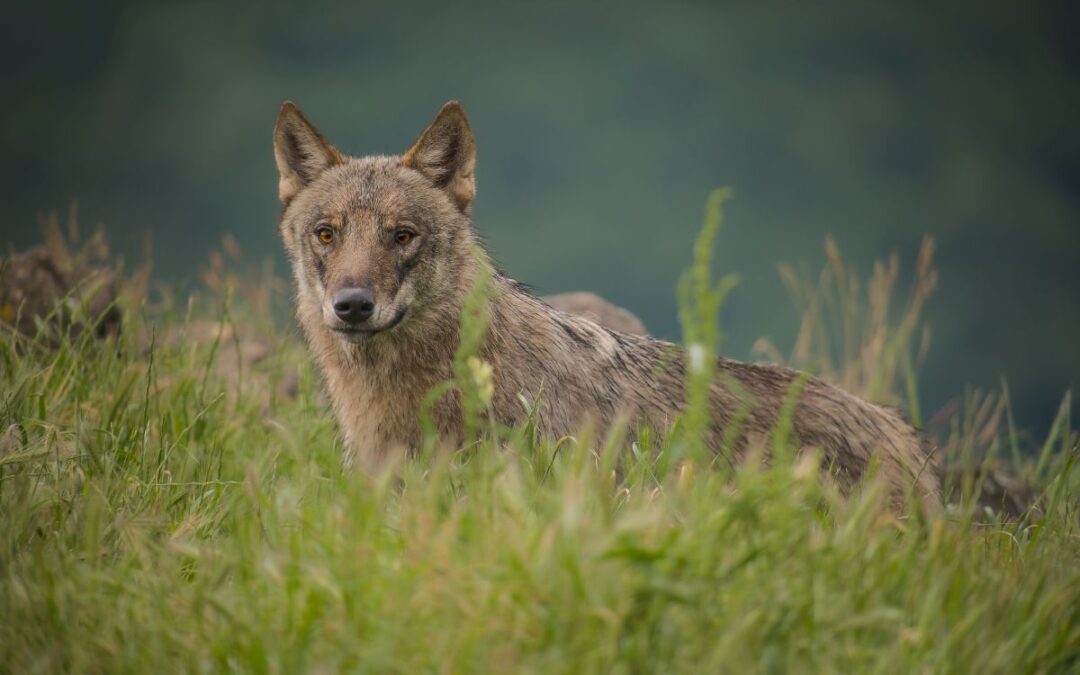
Picture: Martin Tomas
At the initiative of the Bulgarian Society for the Protection of Birds (BSPB), a draft mechanism has been developed to compensate owners of livestock attacked by wolves (Canis lupus). Its development is part of the efforts to find solutions to reduce conflict between large carnivores and livestock breeders and to curb the illegal use of poison against wolves, which often also results in the deaths of vultures and eagles. The draft was prepared by Dr Vladimir Todorov, a large carnivore expert at the Institute of Biodiversity and Ecosystem Research of the Bulgarian Academy of Sciences (IBER-BAS), and includes specific proposals for procedures to register, assess and compensate for damage.
A consultative meeting to present and discuss the draft mechanism was held in Sofia on 18 November. Participants included representatives of the Ministry of Agriculture and Food, the Ministry of Environment and Water, the Executive Forest Agency, the National Hunting and Fishing Association – Union of Hunters and Anglers in Bulgaria, the Central Balkan National Park Directorate, the Southwestern State Enterprise, the National Museum of Natural History at the Bulgarian Academy of Sciences, WWF Bulgaria, the Rewilding Rhodopes Foundation and Bioselena.
During the meeting, Dr Stoyan Nikolov from BSPB, co-author of the National Action Plan to Combat the Illegal Use of Poison in Wildlife, presented the risks to biodiversity associated with the illegal use of poison against large carnivores. In practice, rare and protected bird species are often the victims of such poisoning. Dogs, including livestock guarding and hunting dogs, are also frequently killed.
Representatives of the Ministry of Agriculture and Food and the Executive Forest Agency confirmed the need to introduce a new measure to compensate for damage caused not only by wolves but also by jackals, and proposed a specific financial mechanism. The draft document will next be circulated for comments among farmers, livestock breeders and their respective sectoral organisations.
The new national mechanism for registering and compensating for damage caused by wolves was developed with the support of the project Green Belt of Southeastern Bulgaria, funded by the Endangered Landscapes Programme (ELSP). The programme is managed by the Cambridge Conservation Initiative, a collaboration between the University of Cambridge and leading international organisations working to conserve biodiversity. The University and the Endangered Landscapes Programme are supported by Arcadia, a charitable fund of Peter Baldwin and Lisbet Rausing.
The consultative meeting was organised as part of the project Together for Nature, with the support of the Swiss-Bulgarian Cooperation Programme, under the Civic Engagement and Transparency Mechanism (CETM) 2024–2029.
The views and opinions expressed are those of the participants in the discussions alone and do not necessarily reflect those of the Governments of Switzerland and Bulgaria.