 SmartBirds
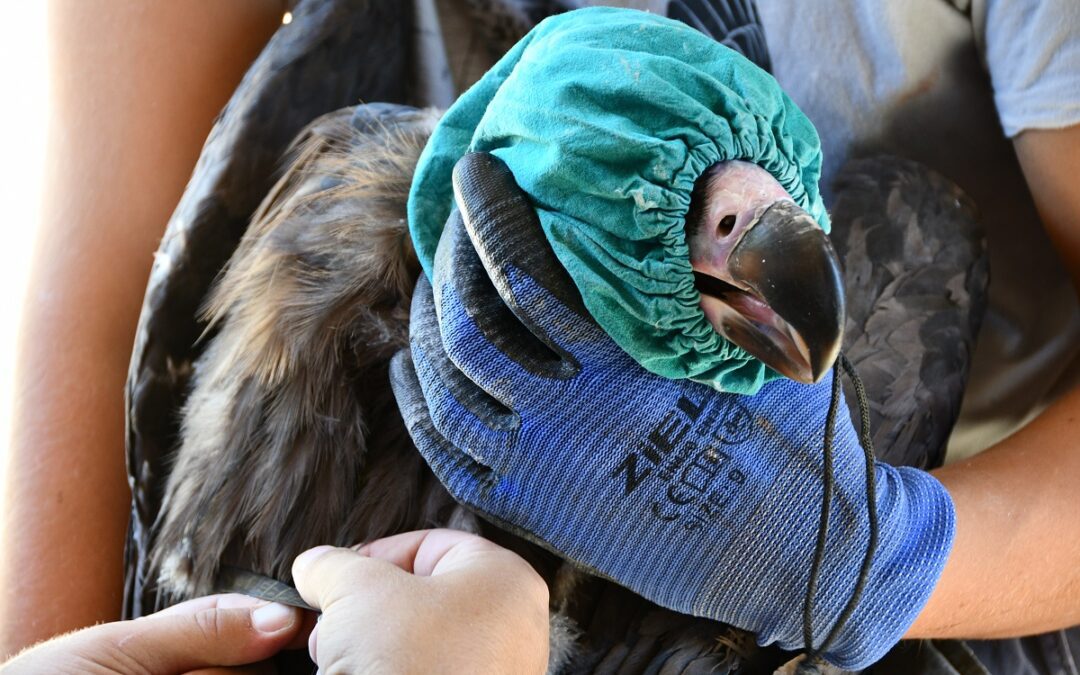
Photo: © Iordanka Goranova/BSPB
On 10 September, teams from the Bulgarian Society for the Protection of Birds (BSPB), Rewilding Rhodopes Foundation and the Green Balkans Wildlife Rescue Centre marked five Cinereous Vultures that arrived in Bulgaria from Spain in May and have been housed in a special adaptation aviary.
The birds underwent health examinations and deworming and were fitted with rings and special GPS transmitters. These will allow experts to track their movements in real time – where they feed and rest, which areas they use and how they gradually adapt to their new environment. The information collected will help us plan even more effective conservation measures for the species.
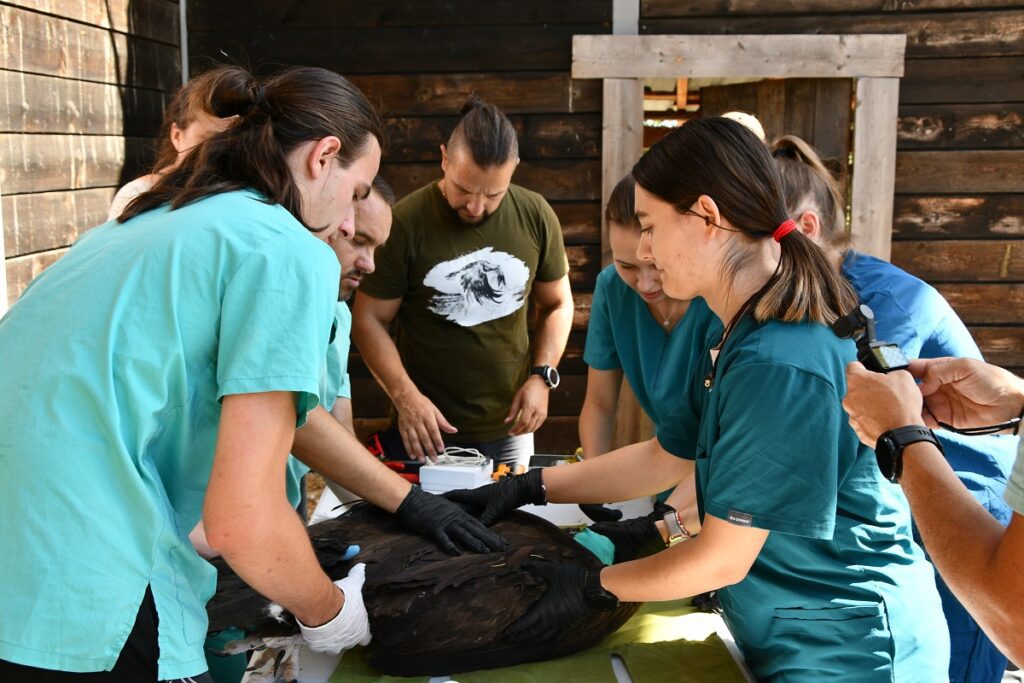
Photo: © Iordanka Goranova/BSPB
The five Cinereous Vultures arrived in Bulgaria in May after a 3,300-kilometre journey from Spain. They were provided by the Spanish conservation organisation GREFA (Grupo de Rehabilitación de la Fauna Autóctona) and placed in a specially built adaptation aviary in the Eastern Rhodopes. After the transmitters were fitted, they will remain there for around another month before being released into the wild.
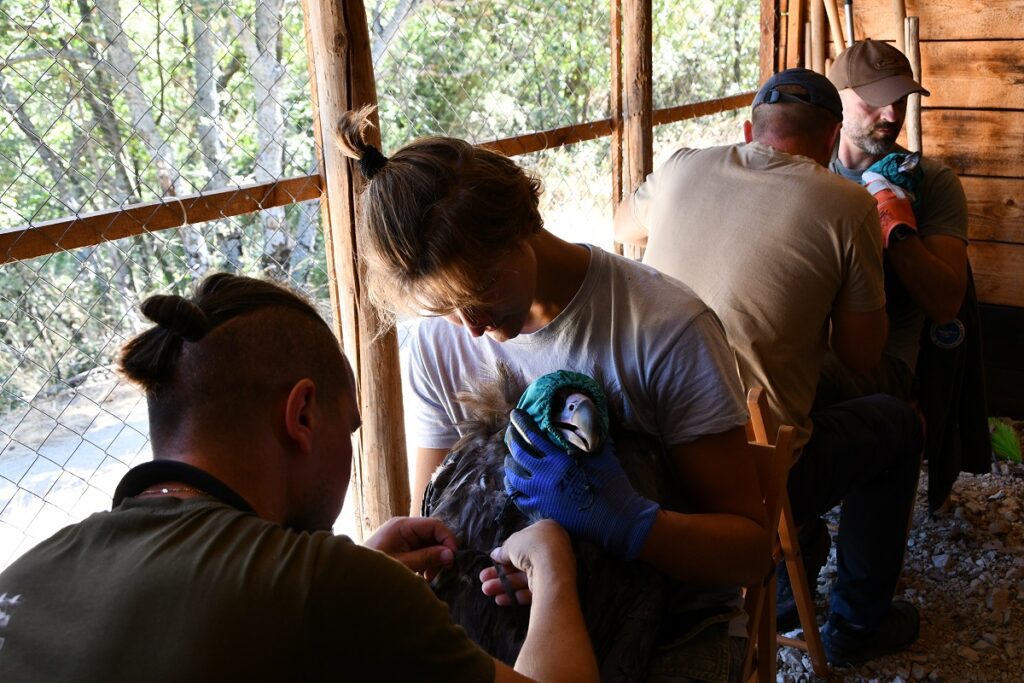
Photo: © Iordanka Goranova/BSPB
Efforts to restore the species to the Rhodopes are already producing impressive results. Just three years after the start of the reintroduction programme, in 2026, eight pairs of Cinereous Vultures were recorded in the Bulgarian part of the Eastern Rhodopes. Three of these pairs successfully hatched chicks – the first confirmed breeding of the species in the area in more than 30 years.
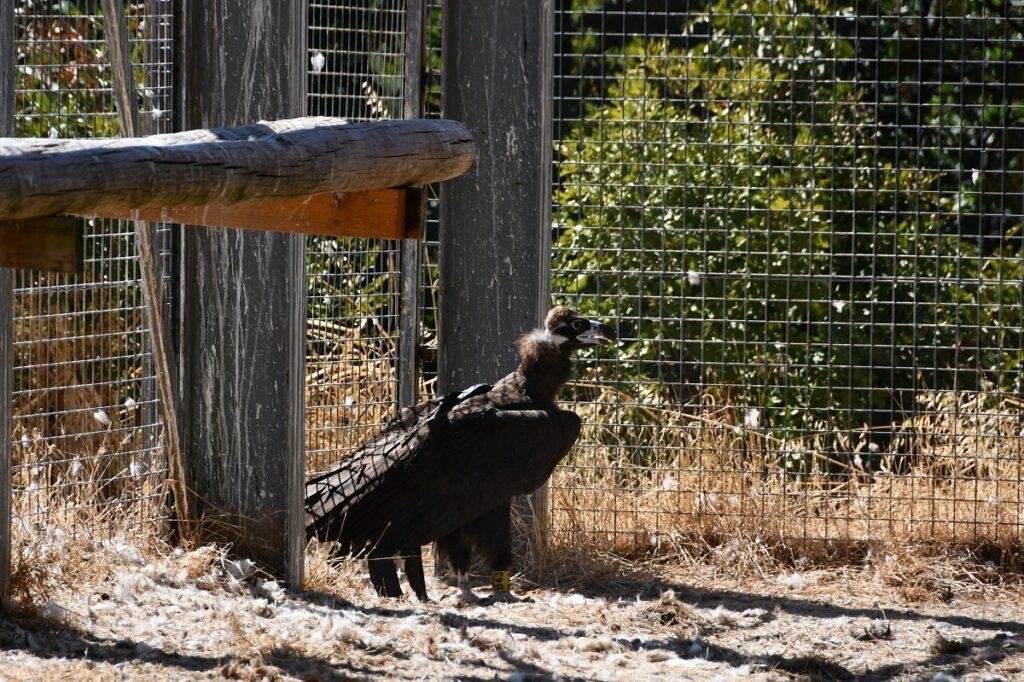
Photo: © Iordanka Goranova/BSPB
A total of 40 Cinereous Vultures have now been released as part of the species restoration programme. The main goal is to establish a sustainable breeding population in the Bulgarian part of the Rhodopes, which will contribute to the recovery of the species across the Balkans and strengthen the only natural colony of Cinereous Vultures in the region – the one in Dadia National Park in Greece.
The Cinereous Vulture is the largest vulture species in Europe and one of the rarest bird species in the Balkans. The species was once widespread in Bulgaria but disappeared as a breeding species at the end of the 20th century. Today, thanks to the long-term efforts of conservation organisations, international cooperation and the support of local communities, it is gradually returning to the Rhodopes.
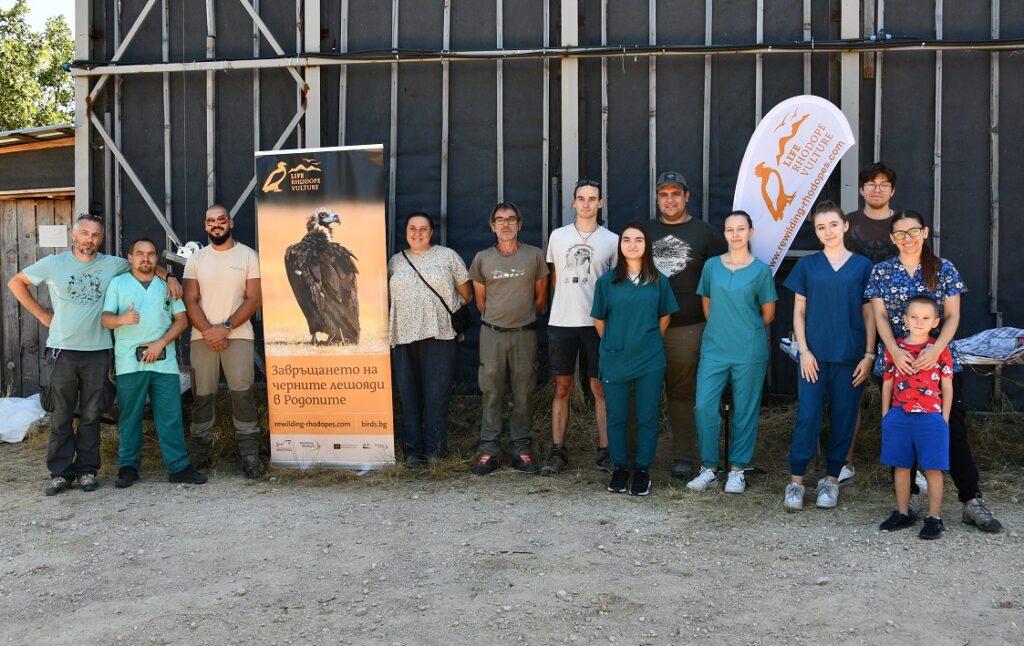
Photo: © Iordanka Goranova/BSPB
The activities are carried out within the LIFE project “Restoration of the Cinereous vulture population and trophic chain in the Bulgarian-Greek cross-border region,” (Project No. 101148254 — LIFE23-NAT-BG-LIFE Rhodope Vulture), co-financed by the LIFE program of the European Union and Rewilding Europe, and implemented by the Bulgarian Society for the Protection of Birds (BSPB) in partnership with the Rewilding Rhodopes Foundation.


